In the annals of pop culture, few characters command the enduring affection and widespread recognition of Mickey Mouse. For nearly a century, this beloved cartoon character has danced, whistled, and charmed his way into the hearts of millions, evolving from a simple ink sketch to a global icon. Delving into Key Milestones and Anniversaries in Mickey Mouse's History isn't just about chronicling dates; it's an exploration of how a humble mouse became a symbol of imagination, innovation, and timeless wonder. His journey reflects not only the changing landscape of animation but also the cultural shifts he both witnessed and influenced, making his story a fascinating lens through which to view a significant slice of the 20th and 21st centuries.
At a Glance: Mickey Mouse's Enduring Journey
- 1928 Debut: Mickey's official debut in Steamboat Willie marked his first public appearance, though he was drawn for Plane Crazy earlier that year.
- Rapid Design Evolution: His early years (1928-1939) saw significant changes, including the addition of gloves, the shift to "pie-eyes," and his iconic flesh-toned face.
- Color and Form: Mickey first appeared in color in 1932 for a parade, but Mickey's Garden (1935) was his first full-color short, solidifying his classic look.
- Fred Moore's Influence: The 1938-1939 redesign by Fred Moore brought a more appealing, animated quality to Mickey's face and overall design.
- Mid-Century Modernization: From the 1940s to the 1970s, Mickey's design continued to be refined, adapting to new animation styles and mediums.
- Into the Digital Age: The 1980s onward saw Mickey embrace CGI, stop-motion, and diverse stylized interpretations across various new series and features.
- 95 Years Young: In 2023, Mickey celebrated his 95th birthday, a testament to his incredible longevity and cultural impact.
The Genesis of a Global Icon: 1928 and Beyond
Before Mickey Mouse became a household name, he was just an idea, born from the creative mind of Walt Disney after losing the rights to his previous character, Oswald the Lucky Rabbit. Alongside animator Ub Iwerks, Disney hastily developed a new character: a plucky little mouse. While Plane Crazy was the first cartoon featuring Mickey to be produced, it was Steamboat Willie that debuted to the public on November 18, 1928, making it his official birthday. This synchronized-sound short wasn't just a cartoon; it was a revolution, catapulting Mickey Mouse into immediate stardom and forever changing the landscape of animation.
From that historic debut, Mickey's journey through animation history began, marked by a fascinating series of design iterations that reflect both technological advancements and evolving artistic sensibilities.
Mickey's Earliest Evolutions: From Pie-Eyes to Pear-Shape (1928-1939)
The Mickey we know today didn't spring fully formed onto the screen. His earliest appearances reveal a character in flux, each short subtly refining his look.
- 1928: The Raw Beginnings: In his very first cartoon, Plane Crazy, Mickey was a simpler creature. He lacked gloves and shoes, sported large, expressive eyes that consumed half his face (a trait shared with Goofy in his early days), and had a noticeably thick tail. By the time The Gallopin' Gaucho rolled around, he'd gained shoes, and his large, merging eyes began to hint at future designs. When Steamboat Willie finally premiered, his shorts featured buttons spaced more closely, distinguishing them from later versions.
- 1929: Enter the Gloves and "Pie-Eyes": The very next year brought significant changes. The Opry House introduced the iconic white gloves, a practical design choice to help distinguish his hands from his dark body against dark backgrounds. In The Karnival Kid, Mickey received "pie-eyes"—pupils shaped like sliced pies—and even eyebrows, adding a new layer of emotion. This "pie-eyes" design quickly became a staple, persisting in comics and merchandise for a decade, showcasing how quickly design elements became iconic.
- 1931-1932: Experimentation with Expression: The early 1930s saw some back-and-forth on Mickey's facial features. Blue Rhythm briefly removed the "pie-eyes" and eyebrows, only for them to reappear in Musical Farmer. The Beach Party also opted out of eyebrows, demonstrating animators' continuous search for the perfect balance of cuteness and character. A monumental step came in 1932 with Parade of the Award Nominees, which marked Mickey's first appearance in color, albeit with green shorts – a stark contrast to his eventual red.
- 1935: Full Color and a Flexible Form: A pivotal year, 1935 brought Mickey's Garden, the first full-color short to feature his now-standard outfit, complete with oval-shaped buttons and cheerful yellow gloves. This was the moment his classic look began to solidify in animation. Soon after, Pluto's Judgement Day introduced a pear-shaped body, a clever modification designed to give animators more flexibility and fluidity in his movements.
- 1936-1939: The Fred Moore Redesign and a Modern Face: In 1936, Mickey's Grand Opera saw his gloves revert to white, a change that would largely stick. However, a much more dramatic shift occurred in 1938. The Whalers changed his face color to a flesh-toned hue, moving away from the stark black and white. More profoundly, in the Mickey Mouse Meets Robinson Crusoe comic strip (December 22, 1938), legendary artist Floyd Gottfredson adopted Fred Moore's revolutionary new design. This gave Mickey eyes with distinct pupils, not just solid black ovals covering his entire forehead. These new pupils were initially pie-shaped but quickly transitioned to a more classic round form. This redesign wasn't fully seen in animation until 1939's Mickey's Surprise Party, where his more vibrant, flesh-toned face was humorously explained as the result of contact lenses. This redesign made Mickey significantly more appealing and easier to animate with a wider range of emotions, setting the stage for his next era.
Mid-Century Modern Mickey: Refining the Icon (1940s-1970s)
The mid-century period saw Mickey become a global phenomenon, and his design continued to subtly evolve, adapting to new storytelling needs and animation conventions.
- 1940s: Slimming Down and Shifting Views: In 1940, Mr. Mouse Takes a Trip introduced brown shoes, a departure from his usual yellow. The following year, The Little Whirlwind showcased a slimmer Mickey with perspective ears, meaning they weren't always perfectly round and facing the camera—a more realistic (for a cartoon) approach. Orphan's Benefit and Lend a Paw further refined this by giving him black ear insides, adding depth to his character. By 1947, in Mickey's Delayed Date, he appeared taller, but his ears returned to their perfectly rounded, always-facing-the-camera orientation that remains a hallmark of his classic look.
- 1950s: Television and New Angles: With the advent of television, Mickey found new platforms. Pluto's Party (1952) presented a more angular, shorter design for Mickey and reintroduced lower eyebrows, giving him a slightly different expressive range. The iconic Mickey Mouse Club, which debuted in 1955, showed him with eyebrows in its intro but in his well-established, classic design during its opening segments. Interestingly, Nash Rambler Commercials from the same year featured a simpler design with an angular head and ears, demonstrating how his look could be adapted for different media and purposes.
- 1970s: Revival and Reinterpretation: After a period of fewer theatrical shorts, Mickey saw a revival. The Mickey Mouse Club (Revival) in 1977 presented a design similar to his 1953 look but with thinner eyebrows, smaller eyes, and a slightly different outfit, reflecting the evolving aesthetics of children's television.
The Modern Mouse: CGI, Reboots, and Reinterpretations (1980s-Present)
The late 20th and early 21st centuries have been a period of immense change for Mickey, as he navigated new animation technologies and a desire to connect with contemporary audiences.
- 1980s: Nostalgia and Cameos: Mickey's Christmas Carol (1983) brought Mickey back to the big screen, removing his eyebrows and utilizing a drawing style closer to his 1940s appearance, complete with lighter brown shoes. A landmark moment came in 1988 with Who Framed Roger Rabbit, where Mickey appeared in his current design, though with some minor inconsistencies like yellow buttons in some shots (white in others) and eyebrows despite the film's 1947 setting. His 60th birthday celebration, Mickey's 60th Birthday, showcased him in his contemporary design, sporting a blue shirt and a tuxedo.
- 1990s: Continued Evolution and Stylistic Shifts: The early 90s saw more variations. In 1990's The Muppets at Walt Disney World, eyebrows returned, and he wore a light blue shirt with pink stripes and a purple jacket. A Goofy Movie (1995) featured Mickey in multiple cameos: first in a red shirt, orange pants, and brown shoes with white soles and eyebrows; then later in his regular outfit. The innovative short Runaway Brain (1995) made him shorter, with larger yellow buttons on his shorts, notably without the back buttons often seen in earlier designs.
- The Turn of the Millennium: Consistency and CGI: As the new millennium dawned, Mickey's look stabilized somewhat for animated series. Mickey Mouse Works (1999-2000) returned his shorts buttons to white, maintaining a bigger, more prominent shape. In House of Mouse (2001-2003), he frequently appeared in a tuxedo, reflecting his role as a host.
A major leap occurred in 2004 with Mickey, Donald, Goofy: The Three Musketeers, which utilized his current design, though his younger form and end credits included eyebrows. The same year, Mickey's Twice Upon a Christmas marked his first all-CGI feature, giving him perspective ears, smaller eyes, and larger black pupils—a significant technological and artistic shift. - 2006-2016: The Clubhouse Era: Mickey Mouse Clubhouse (2006-2016) introduced a CGI design with perfectly flat round ears, round buttons, and eyes reminiscent of early-1940s cartoons, but with realistic button textures. This became a highly recognizable look for a generation of young viewers, making it easy to discover Mickey Mouses age in a new, interactive format.
- 2010s: Retro Revivals and Modern Takes: Epic Mickey (2010) delighted fans by returning to his 1936 design, but rendered in 3D and full color, offering a nostalgic yet fresh take. Its 2D counterpart, Epic Mickey: Power of Illusion (2012), even featured the 1929 "pie-eyes" in its cutscenes. The critically acclaimed Get a Horse! (2013) paid homage to his Steamboat Willie-based design, ending with a charming shot featuring his 1929 "pie-eyes."
Perhaps the most impactful recent redesign came with the Mickey Mouse (2013-2019) and The Wonderful World of Mickey Mouse (2020-2023) series. These cartoons embraced his 1929 face with "pie-eyes," a skinnier body, a white-tinted face, and prominent yellow shorts buttons, proving that even a character pushing 90 could feel fresh and contemporary by looking to his past. - 2017-Present: Diverse Interpretations and New Adventures: The late 2010s and early 2020s have seen Mickey continue to diversify his animated presence. Mickey Mouse Mixed-Up Adventures (2017-2021) used a stylized Mickey Mouse Clubhouse design with realistic button textures, while Disney Junior Nursery Rhymes and related shows (2017-present) adopted a 2D flash Disney Junior design featuring extremely large eyes/pupils, 1950s-like eyebrows, and dark blue fur.
Chip 'n' Dale: Park Life (2021-2024) surprisingly reverted to his 1950s design with eyebrows, showcasing a cyclical appreciation for his different looks. Mickey Mouse Funhouse (2021-2025) continued the Disney Junior design without realistic button textures. Special appearances like Count Mickula in Mickey's Tale of Two Witches (2021) and the traditional clothing in Mickey in a Minute (2022) demonstrate a willingness to play with his identity. Mickey Saves Christmas (2022) and Mickey and Friends: Trick or Treats marked his first foray into stop-motion animation, resembling his modern design.
In 2023, the heartwarming Once Upon a Studio depicted him with his Mickey's Birthday Party design but with rounded ears, a blend of classic and modern. Looking ahead, Mickey Mouse Clubhouse+ (2025) will return to a CGI design similar to previous shows, with original Mickey Mouse Clubhouse buttons and more realistic textures, ensuring Mickey continues to evolve while honoring his roots.
Beyond the Screen: Anniversaries and Cultural Impact
Mickey Mouse's journey isn't solely confined to his animated appearances and design changes; it's also marked by significant anniversaries that celebrate his monumental cultural impact. These milestones are more than just dates; they're global events that bring together generations of fans.
- 25th Anniversary (1953): While perhaps not as overtly celebrated as later anniversaries, this marked a significant quarter-century of Mickey's presence, cementing him as a lasting figure in the burgeoning entertainment industry.
- 50th Anniversary (1978): Half a century of Mickey was a huge moment. This anniversary saw a renewed focus on his legacy, with special broadcasts, merchandise, and tributes acknowledging his status as a true American icon.
- 60th Anniversary (1988): The late 80s celebrated Mickey's 60 years with pomp and circumstance. This period often highlighted his classic adventures and saw the release of Mickey's 60th Birthday special, reintroducing him to a new generation while honoring his past.
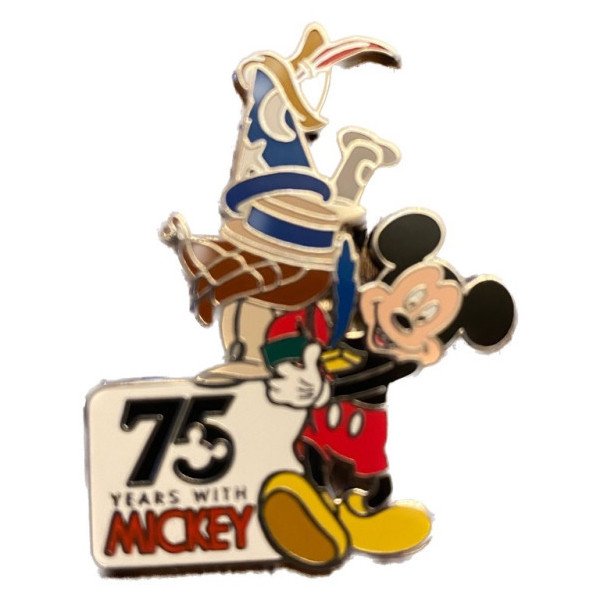
- 75th Anniversary (2003): As Mickey entered his diamond jubilee, the celebrations embraced both his classic appeal and his forward-looking ventures into CGI. This era often explored his multifaceted roles, from pioneering animated star to beloved park greeter.
- 90th Anniversary (2018): Marking nearly a century of stardom, Mickey's 90th anniversary was a massive global event. Disney parks worldwide held special celebrations, new merchandise flooded stores, and commemorative art and media productions highlighted his incredible longevity and universal appeal. It was a moment to reflect on how a simple cartoon character had become an emblem of joy and optimism.
- 95th Birthday (2023): Just last year, Mickey Mouse celebrated his 95th birthday. This latest milestone underscores his unparalleled staying power. Still vibrant and relevant, Mickey continues to be a central figure in the Disney universe, inspiring new stories, technologies, and generations of dreamers. Each anniversary serves as a powerful reminder of his unique position in history and his ability to transcend time and trends.
The Enduring Magic: Why Mickey Still Matters
Mickey Mouse isn't just a cartoon character; he's a phenomenon. His journey from a rudimentary black-and-white sketch to a sophisticated CGI character reflects the entire history of animation itself. What makes his story so compelling is not just the visual evolution, but the consistent warmth, resilience, and optimism he embodies.
He's a character that has adapted without losing his soul. Each design change, each new series, is a fresh attempt to make Mickey relevant to a contemporary audience while staying true to the spirit Walt Disney first instilled in him. He remains a comforting presence, a symbol of childhood wonder, and a reminder of the power of imagination. His milestones are a roadmap not just of his life, but of how storytelling and technology have intertwined to create enduring magic.
Unpacking Common Questions About Mickey's Evolution
Understanding Mickey's full history often raises a few common questions. Let's clarify some of the details:
Q: Did Mickey always wear gloves?
A: No, Mickey didn't wear gloves in his very first appearance in Plane Crazy (1928). White gloves were introduced in The Opry House in 1929, primarily to help his hands stand out against his dark body when animated.
Q: When did Mickey get color?
A: Mickey's first appearance in color was in the 1932 short Parade of the Award Nominees, where he notably wore green shorts. However, his first full-color short with his standard red shorts and yellow gloves was Mickey's Garden in 1935.
Q: Was Mickey always "flesh-toned" on his face?
A: No, in his earliest shorts, Mickey's face was white. It changed to a flesh-toned hue in The Whalers (1938) and was further refined to a more vibrant flesh tone with Fred Moore's redesign, first seen in comics in late 1938 and then in animation in Mickey's Surprise Party (1939).
Q: Why do Mickey's ears sometimes "turn" with his head and sometimes stay perfectly round?
A: This is a design choice that has varied over the decades. In early animation, for simplicity and consistency, Mickey's ears were often drawn as two perfect circles that remained facing the viewer, regardless of his head's angle (known as "perspective ears" or "non-perspective ears"). In some eras (like The Little Whirlwind in 1941 or modern CGI versions), animators have given his ears perspective, allowing them to turn with his head for a more three-dimensional and realistic (for a cartoon character) look. The flat, round ears are often considered his most iconic "classic" style.
Your Journey Through Mickey's Legacy
Exploring the key milestones and anniversaries in Mickey Mouse's history reveals a character who is much more than just a drawing; he's a living archive of animation's evolution and a testament to the power of enduring creativity. From his humble 1928 debut to his 95th birthday in 2023, Mickey has consistently redefined what it means to be a cultural icon.
As you look back at his many iterations, you're not just seeing a mouse; you're witnessing the growth of an art form, the ingenuity of countless animators, and the unwavering optimism of a character who has brought joy to billions. So next time you see Mickey, whether in a classic short or a modern CGI adventure, take a moment to appreciate the incredible journey that has brought him to you, a journey still unfolding year after year.